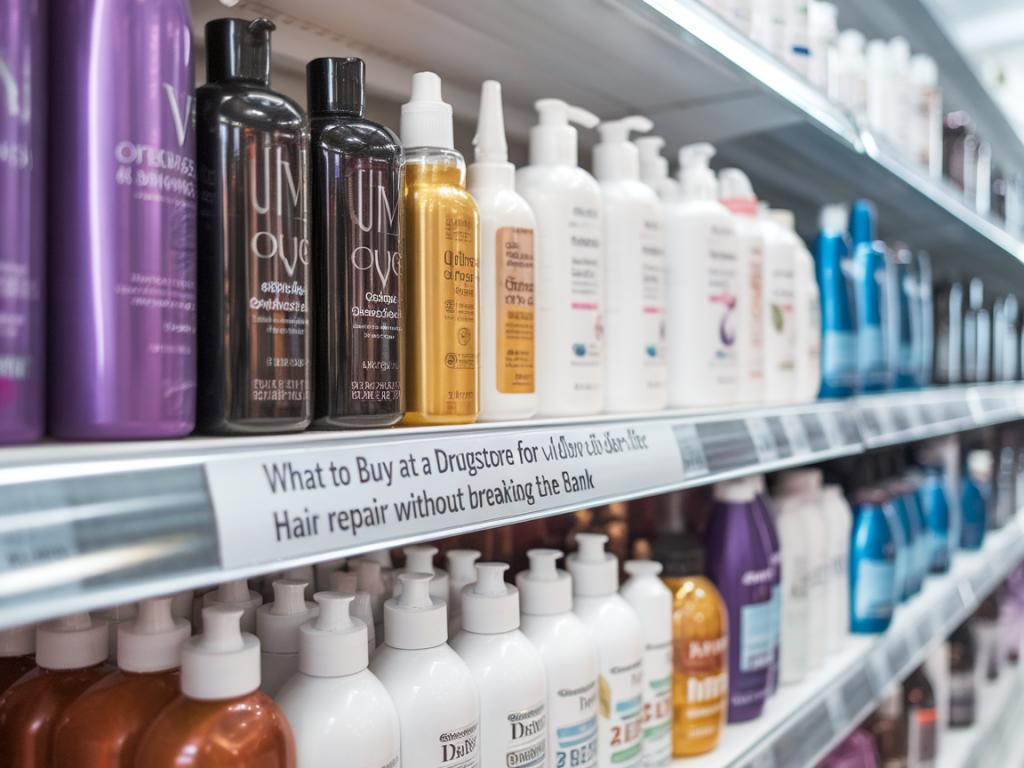
I’ve had my fair share of hair disasters — over-bleaching experiments in my twenties, the occasional heat-styling frenzy when life gets busy, and the slow wear-and-tear of everyday pollution. Over the years I’ve learned that you don’t need a pricey salon treatment to bring hair back from the brink. With the right drugstore buys and a few consistent habits, you can get salon-like repair without breaking the bank. Here’s everything I reach for and how I use each product to keep my hair healthy, soft and shiny.
What I look for in drugstore hair products
Before I tell you what to buy, let me share the criteria I use when choosing drugstore items. These are simple filters that save time and money:
Protein + moisture balance: Hair needs both. Too much protein makes hair stiff; too much moisture makes it limp. I look for products that list both hydrolyzed proteins (like keratin, silk, wheat) and humectants (glycerin, panthenol).Minimal harsh sulfates: Sulfates like SLS can strip fragile, damaged hair. I prefer sulfate-free or gentler cleansers listed as sodium cocoyl isethionate or sodium lauroyl sarcosinate.Silicone-wise: Silicones can give instant gloss and protection. I use them strategically in leave-ins and serums, but avoid heavy build-up by clarifying once in a while.Affordable active ingredients: Ingredients that actually help — ceramides, niacinamide for scalp health, oils like argan or jojoba — are often found in budget-friendly formulas.My drugstore hair essentials (what to buy)
Below are the items I consistently repurchase. I include product examples you can find easily in most pharmacies or supermarkets.
Gentle shampoo: Look for a sulfate-free option that still cleans. My go-tos: L’Oréal EverPure Sulfate-Free Shampoo or OGX Hydrating + Tea Tree Mint (if your scalp likes a little tingle).Repairing conditioner: A rich conditioner with both proteins and moisture. Try Garnier Fructis Damage Repairing Treat 1 Minute or Pantene Pro-V Repair & Protect Conditioner.Weekly deep treatment or mask: This is non-negotiable. I love the Aussie 3 Minute Miracle Moist (affordable and effective) and the Neutrogena Triple Moisture Deep Recovery Hair Mask when my hair feels especially dry.Protein treatment (occasional): Use sparingly — once every 4–6 weeks if your hair is very damaged. The ApHogee Two-Step Protein Treatment is drugstore-adjacent and potent; for a gentler option, try Garnier’s Fructis Damage Repairing Treat with plant-derived protein.Leave-in conditioner: A good leave-in is a game changer. I recommend It's a 10 Miracle Leave-In or the Not Your Mother's Leave-In Detangler for softer, manageable hair.Heat protectant: Don’t skip this. Hottest affordable picks: Tresemme Thermal Creations Heat Protectant or John Frieda Frizz Ease Heat Defeat.Hair oil or serum: For sealing ends and adding shine, MoroccanOil is lovely but pricer — drugstore winners include OGX Renewing Argan Oil or Garnier Fructis Sleek & Shine Anti-Frizz Serum.Clarifying shampoo (monthly): To prevent build-up from silicones and styling products, I use a clarifying wash like Neutrogena Anti-Residue Shampoo once a month.How I use these products in a weekly routine
Consistency beats obsession. Here’s the simple routine I follow that keeps my hair looking salon-refreshed.
Daily-ish cleanse: Shampoo 2–3 times per week unless you exercise daily and need more. On non-shampoo days I use conditioner only (“co-wash”) or a gentle rinse to avoid overstripping.Every wash: - Shampoo, rinse. - Apply repairing conditioner, comb through with a wide-tooth comb from mid-lengths to ends, leave 2–3 minutes, rinse with cool water to seal the cuticle.Weekly deep mask: Once a week, replace conditioner with a deep mask. Apply to damp hair, wrap in a warm towel for 10–20 minutes (heat helps penetration), then rinse.Protein vs. moisture schedule: Alternate treatments. If you used a protein treatment this month, follow with 2–3 moisture-focused masks over the next 6–8 weeks. If your hair is very damaged, a protein treatment every 4–6 weeks can restore structure — but don’t overdo it.After shower: Towel-blot (never rub). Apply a pea-sized amount of leave-in to damp hair, focusing on ends. Add a small amount of oil or serum to seal and smooth. If I plan to style with heat, I always finish with a heat protectant spray.Styling: Use low to medium heat. I’ve trained myself to set straighteners at lower temps and do quick passes rather than clamping repeatedly. It minimizes damage and preserves shine.Budget tips and smart swaps
Here are little habits that save money while delivering results:
Buy multi-use products: Choose an oil that doubles as a pre-shampoo treatment, heat-protectant, and shine serum.Pay attention to concentration: Some cheaper products are diluted. If a treatment doesn’t feel like it’s doing anything after a few uses, try a different formula — there’s no shame in switching.Look for sales and coupon apps: Stock up on masks or leave-ins when there’s a 2-for-1 or loyalty points back.DIY boosts: Adding a teaspoon of your favorite oil to a mask can amp up hydration; a small amount of honey adds humectant power. Use sparingly to avoid sticky buildup.Common questions I get
Can drugstore products really fix split ends? Split ends are a physical break — no product can fully "heal" them. However, regular trims, sealing oils, and strengthening masks reduce the appearance and prevent further splitting.
How often should I use a protein treatment? Usually once every 4–6 weeks for very damaged hair. If your hair becomes stiff or brittle, switch to moisture-focused treatments and reduce protein frequency.
Is silicone bad? Not inherently. Lightweight silicones like dimethicone provide smoothness and protection. The issue is buildup. Use a clarifying shampoo monthly to avoid dulling.
Are natural oils better than synthetic ingredients? Both have their place. Oils like argan and jojoba moisturize and seal, while synthetic ingredients (like certain silicones and conditioning agents) can offer protection and immediate smoothing at a lower cost. I favor a balanced approach.
If you want, I can put together a sample shopping list under £30 (or $30) with exact products available in your region — just tell me where you shop and I’ll tailor it. I love helping readers find realistic routines that actually fit into busy lives, and these drugstore finds have been my go-tos when I need quick, effective repair without the salon price tag.