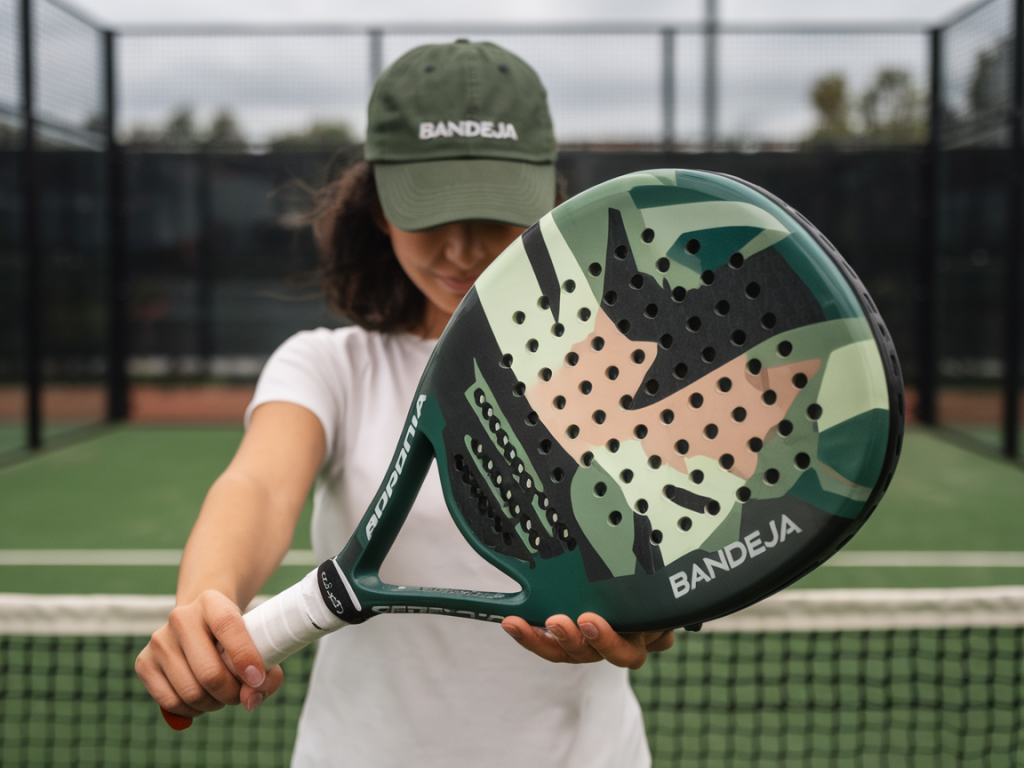
I still remember the first time I held a padel racket: the weight distribution felt foreign compared with a tennis racquet, the surface shimmered with personality, and I immediately wanted to know which one would make me more confident on the court. Over time I’ve learned that choosing a padel racket is as much about personal fit and playing style as it is about brand reputation. In this guide I’ll walk you through everything I look for when selecting a padel racket, share practical tips I’ve picked up from experts at Bandeja Shop, and explain how to test and care for your racket so it serves you for seasons.
Why the right padel racket matters
When you swing, every gram, every millimetre of balance and every texture on the face transforms how the ball reacts. A racket that suits your physical strength, movement patterns and tactical preferences can elevate your game—giving you more control, less fatigue, and better shot variety. Conversely, a poorly chosen racket will amplify flaws and cause frustration.
Understanding shapes and what they mean for your game
The simplest way to narrow choices is by racket shape. Each shape changes sweet spot, balance and playability. Here’s a quick breakdown I use when shopping:
| Shape | Feel | Good for |
|---|---|---|
| Round | Large sweet spot, forgiving | Beginners, players prioritising control |
| Teardrop | Balanced between power and control | All-round players developing technique |
| Diamond | Higher balance point, more power | Advanced players seeking powerful smashes |
If you’re curious to browse models while keeping these shapes in mind, I often point readers to the curated selection at padel racket where brands and shapes are clearly organised—perfect for comparing specs side by side.
Materials and construction: why they matter
Rackets combine a core, face materials and frame. The core is typically EVA foam or polyethylene; density affects touch and power. Softer cores (low-density EVA) give more control and comfort but slightly less explosive power; firmer cores (high-density EVA or polyethylene) return more speed on shots.
The faces are often carbon fibre, fiberglass or a mix. Carbon offers rigidity and responsiveness—favoured in premium models from Bullpadel, Nox, Head and Babolat—whereas fiberglass gives a softer feel and is kinder to players who prioritise control.
Weight and balance: matching racket to body and style
Weight is a key comfort and performance factor. I recommend:
- Light (≤350 g) — Easier to manoeuvre, ideal if you have less upper-body strength or prefer fast reaction volleys.
- Medium (350–370 g) — The most versatile, fits many players; a common choice for mixed-level club players.
- Heavy (≥370 g) — Adds power and stability but requires strength to control, good for advanced aggressive players.
Balance (head-light, even, head-heavy) changes feel: head-heavy increases power but can slow reactions at the net; head-light gives quicker hands. I personally prefer a slightly head-light to even balance for the best mix of net play and baseline defence.
Choosing by playing style and level
Be honest about your stage and what you want to improve. Here are practical pairings I use when advising players:
- Complete beginner: Round shape, soft core, light weight—focus on consistency and reducing mishits.
- Weekend club player: Teardrop shape, medium core, medium weight—balanced power/control for improving technique.
- Aggressive/advanced player: Diamond or high-balance teardrop, firmer core, heavier—maximises smashes and rapid attacks.
- Injury-sensitive players: Softer faces and cores to absorb vibrations, lighter frame to protect shoulders and elbows.
Brands and models I recommend exploring
Some brands have signature technologies that consistently deliver on specific needs. I like to match a player's profile to the right brand:
- Bullpadel — Known for control-oriented models and innovative materials; great for intermediate to advanced players.
- Nox — Excellent variety, particularly in rackets that balance touch and power; their pro lines are often very playable.
- Head — Strong in durable carbon construction with modern shapes; reliable for players wanting power with stability.
- Adidas & Wilson — Stylish, technically solid rackets with good value propositions.
- Siux & Babolat — Often feature high-quality faces and cores suited to dedicated players who prioritise performance.
How I test a racket before buying
Testing is essential. When I visit a shop like the Bandeja Shop flagship in Vallauris or try demo events, I follow this simple ritual:
- Warm up with volleys to evaluate manoeuvrability at the net.
- Hit serves and smashes to assess power and stability.
- Play some defensive lobs and precise drops to feel the sweet spot and control.
- Notice comfort: any sharp vibrations or discomfort on off-centre shots is a red flag.
Maintenance, grips and accessories
Caring for your racket extends its life. I always keep an eye on:
- Grip condition: Replace overgrips regularly for tack and hygiene.
- Protector tape: Use a bumper guard to reduce frame chips from court contact.
- Storage: Avoid extremes of heat and leave in a thermal racket bag—Bandeja Shop carries thermal bags that protect the carbon and the core.
- Cleaning: Wipe the face after play to remove grit and sweat build-up.
Buying online vs in-store—and the perks of Bandeja Shop
I appreciate the convenience of online shopping, but nothing replaces the in-person feel. Bandeja Shop combines both: a detailed online catalogue with clear filters for shape, weight and brand, plus a physical store where you can test rackets. They also offer expert advice, a 30-day returns policy and international shipping—so you can make a confident choice even from afar. If you’re a regular player, the E-Club Bandeja loyalty benefits (discounts, early access to new ranges) are worth joining.
Final practical checklist before you buy
- Decide your primary goal: control, balance or power.
- Choose a shape that matches that goal (round, teardrop, diamond).
- Pick a weight and balance compatible with your strength and movement.
- Test in person if you can, or buy from a retailer with a good returns policy.
- Protect your racket with a quality bag and maintain grips and guards.
Buying a padel racket should feel empowering, not overwhelming. With the right questions and a few hands-on tests, you’ll find a tool that complements your style and helps you enjoy the game more. If you want, tell me your level and playing tendencies and I’ll help narrow options—what type of shots do you want to improve first?