I always travel with a tiny beauty pouch on long-haul flights — not because I expect to arrive looking flawless, but because a few small, well-chosen products make the difference between landing feeling refreshed or dragging myself through customs. Over the years I’ve learned that less is more: a handful of multi-purpose items, packed thoughtfully and used at the right moments, keeps skin calm, lips kissable, and my energy slightly less depleted. Here’s what I tuck into my carry-on pouch and how I actually use each thing during a long flight.
Carry-on packing rules I follow
Before listing the products, a few quick rules I never forget:
Stick to travel-size liquids (100 ml / 3.4 fl oz) and keep them in a clear ziplock for security.Prioritise multi-use items to save space — a balm that doubles as a cuticle treatment is gold.Choose lightweight, refillable packaging where possible to avoid bulky glass bottles.Know the airline’s cabin policy — most accept small aerosols and sprays but check rules for international flights.The tiny pouch: my non-negotiables
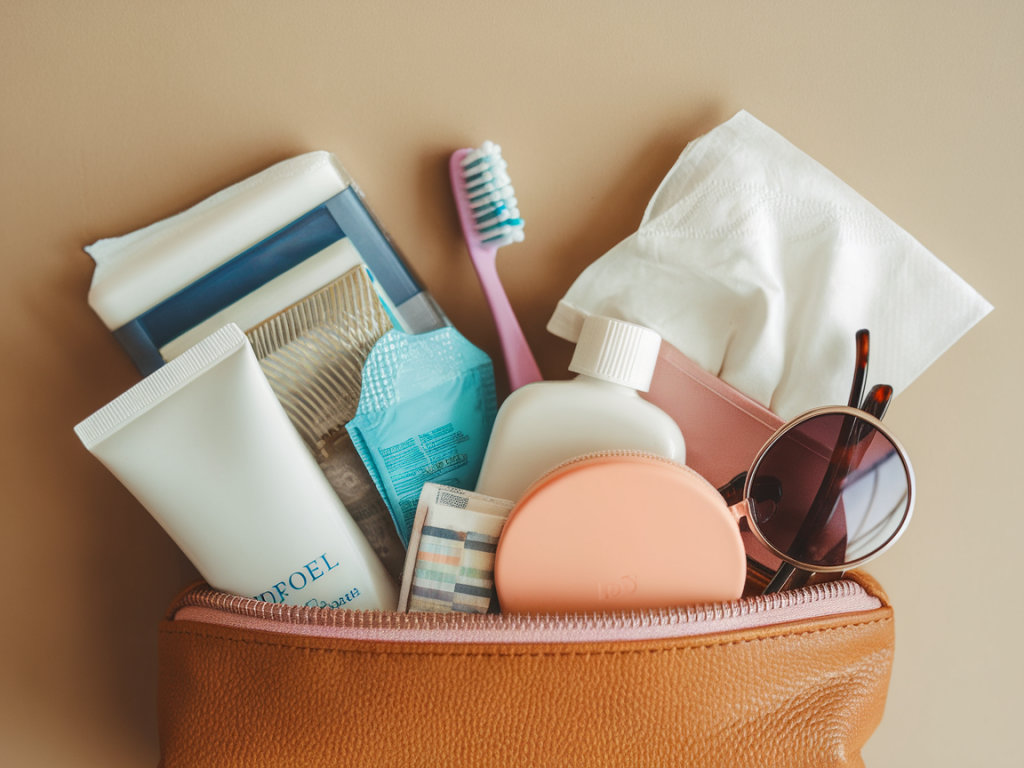
I use a slim, soft pouch that fits inside my day bag. Nothing glamorous — just easy to unzip mid-flight. Inside you’ll typically find:
Hydrating mist — A small 50 ml thermal water or hydrating mist (I love Avène Thermal Spring Water or Caudalie Grape Water). A quick spritz wakes my skin without disrupting makeup and helps with dry cabin air.Gentle cleanser wipes — Not full-face makeup wipes, but micellar cleansing wipes or mini cleansing cloths to remove SPF and any travel grime. Bioderma Sensibio wipes are gentle and travel-friendly.Lightweight cream or gel moisturiser — I prefer a hyaluronic acid–rich gel-cream for daytime flights (La Roche-Posay Hydraphase or CeraVe Hydrating Cleanser & Moisturiser combo in travel size work well). Use after the mist to lock in moisture.Overnight balm / rich lip product — A thick lip balm like Laneige Lip Sleeping Mask or Glossier Balm Dotcom. I apply a generous layer before sleep and reapply as needed.Face oil, travel vial — A tiny 5–10 ml dropper of face oil (rosehip, squalane or marula) that I use sparingly at night or on super-dry patches. Squalane is non-greasy and excellent for travel.Mini sunscreen (if you’ll be walking after landing) — A 30 ml mineral or chemical SPF 30. I carry La Roche-Posay Anthelios or Supergoop! mini bottles.Solid beauty swaps — Solid shampoo/conditioner bars, a solid perfume balm, and a stick deodorant to avoid liquid limits and leaks.Hand cream — A compact tube of rich hand cream; I like Kiehl’s Ultimate Strength Hand Salve in a small size.Hydrating eye gel or cooling eye patches — A tiny jar of eye gel or a pair of single-use hydrogel patches for arrival touch-ups. Dr. Jart’s Cryo Rubber masks are a treat if you have space.Dental kit — Travel toothbrush, toothpaste (all under 100 ml), and a little floss. Fresh teeth help you feel human after hours onboard.Earplugs and an eye mask — Not beauty products per se, but crucial for sleep and reducing puffiness from lack of rest.Bandage-style blotting papers — For shiny T-zone touch-ups without adding product.How I use these items during the flight
Timing is everything. My small pouch is organised so I can reach the right thing at the right moment:
After take-off (first 30–60 minutes): I spritz a mist, do a quick cleanse with a wipe if I’m wearing SPF or light makeup, and apply a thin layer of gel moisturiser. Cabin air strips moisture quickly; this first layer keeps dehydration from escalating.Before attempting sleep: I remove makeup properly with wipes if needed, pat on a few drops of face oil where skin feels dry (forehead, cheeks), and slather a rich lip balm. I use earplugs and an eye mask to block light and noise — the small comforts save sleep time.Mid-flight touch-ups: Blotting papers, hand cream, and a mist are my go-to between naps or before meal service. If you want to look polished for an arrival meeting, a quick cold water facial wipe, a little concealer, and a shine-minimising powder from a compact do wonders.Pre-landing 30 minutes: I hydrate again with a mist and a tiny amount of moisturiser, pop in cooling eye patches if I have them, and reapply a thin layer of lip balm. I usually avoid heavy makeup right before landing to prevent clogging pores when my skin is at its most vulnerable.Makeup — the minimalist kit
I keep makeup to an absolute minimum on flights. My in-flight makeup kit includes:
a tinted moisturiser or lightweight BB cream in a small tubea small stick concealer (easy to apply under eyes and on spots)a compact multi-use cream (cream blush that doubles as lip tint)a tiny travel mascara (or clear mascara/eyebrow gel) and a tinted balma small powder compact for shine controlThis lets me freshen up without layering too many products that will sit on dehydrated skin.
Hair and scalp tips
For hair I pack a mini dry shampoo (Klorane or Batiste travel size), a small travel brush, and a silicone hair tie. If I’m trying to sleep, I braid my hair loosely to avoid frizz. If I arrive into humid weather, I’ll use a pea-sized amount of oil on the ends only to tame flyaways.
Skincare swaps that save space
If you’re aiming for a really tiny pouch, try these swaps:
Use a multi-purpose balm for lips, cuticles and dry patches (solid balms are TSA-friendly).Replace bulky bottles with sheet masks for arrival — they take no room and feel luxurious land-side.Use a solid cleanser or cleansing balm that doubles as makeup remover and face wash.Mini sample tubes of your serum or moisturiser work as single-use boosters.Practical extras I seldom forget
A few small practical items rescue me every time:
a tiny resealable bag for emptying out the pouch at security if neededa travel-sized hand sanitiser (gel or spray)a contact lens case and saline solution if you wear lensesa printed miniature list of your morning routine so you don’t overdo products while groggyWhen I travel I’m not aiming to look like a magazine cover — I want to feel comfortable in my skin and arrive with as little drama as possible. Packing a tiny beauty pouch that supports hydration, sleep, and quick freshening is the trick I return to again and again. If you want, I can make a printable checklist of the exact product sizes I recommend for carry-on compliance.