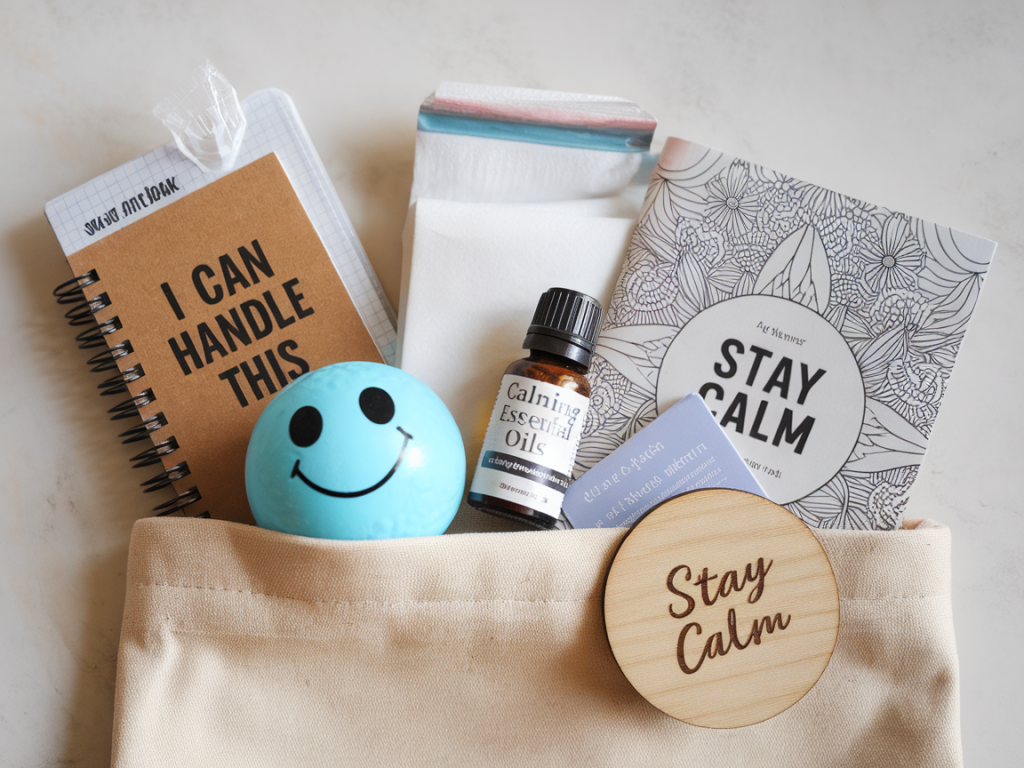
I keep a small navy pouch in my handbag marked as my emergency calm kit. On good days it’s invisible; on bad days it’s a tiny lifeline that helps me move from overwhelmed to steady enough to make one small choice at a time. Over the years I’ve refined it down to five items that quietly do heavy lifting: they anchor my breath, soothe my senses, ground my body, and help me think clearly. Below I’ll walk you through each item, why it works, how I use it in real moments, and easy variations so you can customise a pouch that fits your life.
How I chose these five items
I wanted a kit that is portable, non‑medical, discreet and effective. Many of us don’t want to draw attention during a panic episode, but we do want tools we can reach for instantly. So I pared things back to multipurpose objects that support three essentials during overwhelm: regulation (calming the nervous system), grounding (coming back to the present), and practical soothing (comforting the senses). Each item below meets at least two of those aims.
The five items to keep in your calm‑in‑a‑bag kit
Why: Smell is fast and directly linked to the brain’s emotional centre. A few deep inhales can interrupt a spiralling thought pattern.
How I use it: When I feel my chest tightening, I unclick the inhaler or dab a roller on my wrists, then close my eyes and take six slow breaths: in for 4, hold 2, out for 6. I repeat until the breath feels less jagged. My go‑to blend is lavender with a touch of bergamot for brightness—calming but not sedating.
Practical tip: I like solid inhalers because they’re spill‑proof and TSA friendly. If you prefer a brand, I often recommend Neom or This Works for travel‑friendly rollers.
Why: Tactile sensations help orient your body. When your brain is racing, focusing on texture and weight brings attention back to the physical here‑and‑now instead of runaway thinking.
How I use it: I keep a palm‑sized river stone from a holiday in Cornwall; its cool, worn surface is oddly comforting. If I can’t breathe through the moment, I squeeze the stone or roll it between fingers, noticing the weight, temperature and surface. For my on‑the‑go months I swap it for a silicone stress ball or a small fidget cube—quiet and effective.
Why: Panic distorts inner dialogue. A simple, compassionate phrase acts like a lifeline—something external and factual to hold onto when your own thoughts are unkind or chaotic.
How I use it: I keep a laminated card with “This will pass. Breathe now. One small step.” I read it aloud or whisper it. Saying words can change your internal tone faster than trying to intellectualise feelings. Make your card personal: “You’ve managed this before,” or “I am safe in this moment.”
Why: Low blood sugar or dehydration can amplify anxiety. A nibble can stabilize you physically, making emotional regulation far easier.
How I use it: My kit usually holds a folded square of dark chocolate or a sachet of honey. If you’re diabetic or have dietary restrictions, choose something suitable—glucose tablets, nuts or a sports gel. Sip water first; hydration often helps faster than food in the moment.
Practical note: Replace perishables regularly. I check my snack every two weeks and swap out if it’s melted or stale.
Why: When panic arrives, memory is unreliable. A prewritten, short script guides the nervous system back to calmer rhythms without requiring you to invent steps mid‑crisis.
How I use it: I keep a note on my phone titled “Calm” with two quick options: a 3‑minute breath routine and a 5‑point grounding exercise (name five things you can see, four you can touch, three you can hear, two you can smell, one you can taste). If my phone isn’t an option, I have a compact laminated card in the pouch with the same steps.
My favourite breathing technique: 4‑4‑6 box variant—inhale 4, hold 4, exhale 6. It lengthens the exhale so the parasympathetic system engages. Count quietly and let the out breath be longer than the in.
Putting it together: what a real‑life sequence looks like
Here’s how the kit works when I’m in a café and suddenly feel overwhelmed: I excuse myself to the bathroom, sit down, and pull the pouch open. First, five deep inhalations with my aromatherapy roller. Then I take out the stone and run it through my fingers for a minute while reading my card aloud. I sip some water and nibble the chocolate. Finally, I follow the 3‑minute breathing script. By the time I leave the bathroom, I’m not fixed—panic isn’t gone—but I’m steady enough to get on with the day.
Personalisation and variations
Everyone’s nervous system is different, so customise your kit. Here are a few ideas:
Where to keep it and how to maintain it
Keep one in your everyday bag and another in a larger work bag or glove compartment. Check the kit monthly: replace snacks, refresh the inhaler if oils fade, and wipe down tactile objects. The more familiar the contents become, the faster they’ll work—your nervous system learns the pattern: pouch opens = help is coming.
What if nothing seems to help?
If your kit doesn’t reduce the intensity, that’s okay. These tools are meant to support—not be a cure. Use them to buy space: slower breathing, a sip of water, a moment to call for help. If panic is frequent or disabling, please seek professional support. A therapist, GP, or acute care team can offer long‑term strategies and medication if needed. The kit is for coping in days when overwhelm strikes; it doesn’t replace clinical care.
I’ve found that building the kit is half the benefit—the ritual of choosing and packing items is itself an act of self‑care. It says, silently, “I’m worth grounding.” Keep it small, personal, and portable. And remember: the goal isn’t to eliminate feeling; it’s to have a few reliable tools that help you come back to yourself, one steady breath at a time.