I have always loved the effortless chic of a trench coat — it’s that timeless piece that can make even the simplest outfit feel pulled together. But when you’re petite, a classic trench can easily overwhelm rather than flatter. Over the years I’ve tried lots of styles, torn apart hemlines and sleeves with my tailor, and learned a few reliable tricks to make a trench coat look intentionally proportioned on a smaller frame. Here are the practical tips I reach for when choosing (or altering) a trench that actually makes me feel confident and stylish.
Why proportion matters more than size
It’s tempting to think “petite” means only smaller sizes. In reality, fit and proportion are the keys. A trench that’s too long, boxy or heavy in the shoulder will engulf you. What you want is balance: a coat that follows your silhouette without hiding it, creates a visible waist or vertical line, and keeps movement light. Focus on where the coat hits your body (length), how wide the shoulders are, and whether it creates a clear waistline.
Choosing the right length
Length is the single most important detail for petites. Too long and the coat shortens the look of your legs; too short and you lose the classic trench vibe. I usually go for a knee-length or just-above-the-knee option — it elongates and works with flats or heels.
| Height | Recommended trench length |
|---|---|
| Under 5'2" (157 cm) | Above the knee or mid-thigh |
| 5'2" – 5'5" (157–165 cm) | Just above the knee to knee-length |
| Over 5'5" (165 cm) | Knee-length to mid-calf |
This table is a guideline, not a rule. I recommend trying a few lengths and looking at the overall proportion with the shoes you wear most. If you love long trenches, consider having the hem taken up by a tailor so it feels intentional.
Look for a defined waist
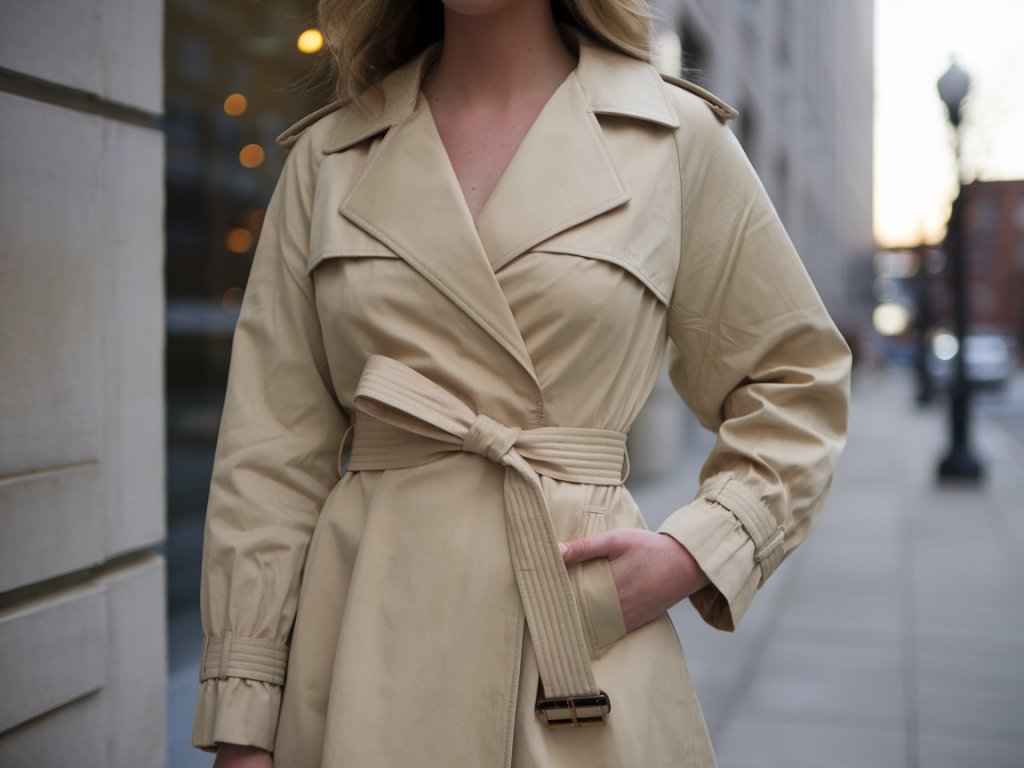
A trench’s belt is your best friend. A belted waist creates definition and breaks up the silhouette — essential for petites. I prefer a belt that’s in the same fabric as the coat rather than a bulky contrasting belt. When tying, avoid a big bow at the front; instead, tie a neat knot or fasten the belt and tuck the ends under to keep the line clean.
If the trench is double-breasted, make sure the buttons don’t add bulk across your chest; you want the coat to nip in slightly at the waist. Single-breasted trenches can also work brilliantly, especially when they have darts or seams that follow your shape.
Shoulder fit and sleeve length
Shoulders that are too wide will make the whole coat look oversized. The seam should sit at your natural shoulder point. If you find a coat you love but the shoulders are slightly off, some tailors can subtly narrow them — though be cautious, as shoulder alterations are more involved than hemming.
For sleeves, petite-friendly trenches have sleeves that hit at the wrist or slightly shorter. Long sleeves that bunch at the wrist make the coat look bigger. If the sleeves are too long, a quick alteration is one of the simplest fixes and instantly elevates the fit.
Fabric, weight and structure
Light to mid-weight cotton gabardine or a cotton-blend keeps the coat from feeling heavy. Heavy, stiff fabrics add bulk; they’re harder to tailor and can look overpowering. I love trenches in classic cotton gabardine (Burberry’s iconic fabric aside), but for budget-friendly options check out Uniqlo, COS, or Mango for elegant, lightweight construction that’s easy to alter.
Also pay attention to the lining. A fully lined trench can feel more polished, but make sure it’s not too stiff or long — an inner lining that ends well above the coat hem can prevent unwanted weight at the bottom.
Collars, lapels and necklines
A large, oversized collar can dwarf a petite face. Look for medium-sized lapels that sit neatly without swallowing your neck. If you prefer drama around the neckline, choose a softer roll collar rather than exaggerated sharp points. A well-proportioned collar frames your face and keeps the whole look balanced.
Single-breasted vs double-breasted
Both styles can work — it depends on your frame and what you want the trench to do. Single-breasted styles tend to be more streamlined and elongating, ideal if you prefer a minimalist look. Double-breasted trenches are classic and structured but can add visual width across the chest. If you choose double-breasted, seek one with a fitted waist and avoid oversized lapels and shoulder epaulettes that add volume.
Details that flatter — vents, slits and lengthening tricks
A back vent or side slits adds movement and prevents the coat from looking like a box. Vertical details — like a single row of buttons, long lapels, or centring seams — help lengthen the silhouette.
- Vertical seams: Choose trenches with seams that create a long line rather than horizontal panels that break your frame.
- Minimal epaulettes: If you like the military detail, pick smaller epaulettes so they don’t overwhelm your shoulders.
- Shorter belts: Make sure the belt is proportionate — a long belt hanging down can look clumsy; a belt that sits neatly at your waist is more flattering.
Colors, patterns and prints
Classic neutrals — beige, tan, navy, black — are always chic, but petites can definitely wear prints and checks if scaled appropriately. A small to medium-scale check or subtle stripe reads better than an oversized pattern that can swallow your frame. Darker colors are naturally slimming, but a bright or light trench can work beautifully if the cut is crisp and well-fitted.
Styling tips to elongate
How you wear a trench matters as much as which one you choose. Here are my go-to styling moves:
- Monochrome or tonal looks: Wearing similar tones underneath your trench keeps the line uninterrupted, which visually lengthens you.
- High-waisted bottoms: Pair the trench with high-waisted trousers or a skirt to create the illusion of longer legs.
- Shorter hems underneath: If your trench is knee-length, wear skirts and dresses that are a touch shorter so your legs look longer in comparison.
- Shoes: Pointed-toe flats, ankle boots with a slightly higher vamp, or modest heels all help elongate the leg line.
When to tailor and what to ask for
Tailoring is often the quickest path to a trench that looks bespoke. For petites, common alterations include:
- Hemming the coat to a more flattering length
- Shortening sleeves to the wrist
- Narrowing the shoulders (more complex and pricier)
- Taking in the waist or adding darts for definition
When you take a trench to a tailor, bring the shoes and clothing you plan to wear with it so they can judge proportions accurately. Ask for a mock fitting with safety pins first — it saves both time and money.
Brands and where to look
For classic styles with good proportions, I often recommend checking out:
- Burberry: Iconic, but pricey. Their cuts are classic and often worth the investment if you find one that fits.
- Uniqlo: Great for lightweight, well-priced trenches that are easy to alter.
- COS: Modern, minimal trenches with clean lines that suit petites.
- & Other Stories: Stylish details and contemporary cuts — often petite-friendly lengths.
- Mango/ Zara / Banana Republic: Good options for trend-led or classic trenches at varied price points.
Secondhand markets, vintage stores and sample sales are also excellent places to find unique trenches. Often you’ll get a higher-quality fabric or a classic cut at a fraction of the price — and tailoring makes them perfect.
Choosing a trench as a petite woman is largely about making deliberate proportion choices. When the shoulders, waist and hem are in harmony with your body, a trench can feel like it was made for you. I always say: invest in fit first, fabric second, and style third. A small alteration can make all the difference — and once you’ve found the right one, you’ll reach for it season after season.