I have a soft spot for a well‑worn wool jumper — the one you reach for on chilly mornings because it feels like an old friend. But there are few things more heartbreaking than discovering your favourite knit has shrunk or is covered in bobbles. Over the years I’ve ruined a few pieces (guilty of the hot tumble dryer once) and rescued many more with simple at‑home methods. Here’s a practical, friendly guide to stopping shrinkage and bobbling, and to fixing minor damage when it happens.
Why wool shrinks and bobbles
Before jumping into fixes, it helps to understand what’s happening. Wool fibres have tiny scales that interlock when exposed to heat, water and agitation — that’s natural felting, and it’s the main cause of shrinkage. Bobbling (pilling) happens when fibres loosen, rub together and form little balls on the surface. Both are normal behaviour for natural fibres, but there are easy ways to minimise them.
Prevention: the habits that save jumpers
Prevention is the best way to keep your jumper looking new. These are the habits I’ve adopted that have made the biggest difference.
Always check the care label. It tells you whether your jumper needs hand wash, cool machine wash on a wool cycle, or dry cleaning. Labels exist for a reason — follow them.Use a mesh laundry bag. When machine washing is allowed, pop your knit in a zipped mesh bag to reduce agitation.Choose a gentle detergent. I use a wool‑specific detergent like Eucalan or Woolite, which conditions fibres and reduces friction. A tiny capful goes a long way.Cold water only. Heat is the enemy. Wash in cold or lukewarm water (see table below for guidance) and never tumble dry.Skip the spin or use very low spin. High spin speeds distort the shape and encourage felting.Lay flat to dry. Gently reshape the jumper while damp and dry it flat on a towel or a mesh drying rack. Avoid hanging, which stretches shoulders.Rotate your jumpers. Wearing the same sweater daily causes friction in the same spots; rotating helps fibres rest.Store properly. Fold your knitwear rather than hanging it. Use lavender or cedar to deter moths; they also keep fabrics smelling fresh.| Care step | Temperature |
|---|
| Hand wash wool | Cold or lukewarm (max 30°C) |
| Machine wool cycle | Cold (wool setting, low agitation) |
| Drying | Flat, room temperature, away from direct heat |
At‑home repairs for bobbles
Bobbles are easy to treat and, in many cases, do not need professional help. I keep two tools in my knitting kit: a small fabric shaver and a sweater comb. Both work, but use them gently.
Fabric shaver: Lay the jumper flat and glide the shaver across the surface. Don’t press hard — let the blade do the work. I prefer battery shavers for portability, such as the Philips Fabric Shaver.Sweater comb or pumice stone: These are great for delicate wools. Brush lightly in one direction to lift pills, then remove them with your fingers or a lint roller.Scissors for stubborn bobbles: If a pill is too close to a seam or appears knitted into the fabric, trim it carefully with small scissors. Hold the fabric taut and snip just the pill — not the knit.Lint rollers and sticky tape: For tiny loose fibres, a lint roller or a piece of tape can pick up bits without damaging the knit.How to un‑shrink (stretch) a slightly shrunken jumper
If your jumper has only slightly shrunk, you can often relax the fibres and gently stretch it back to shape. Success depends on the fibre and how much it shrank.
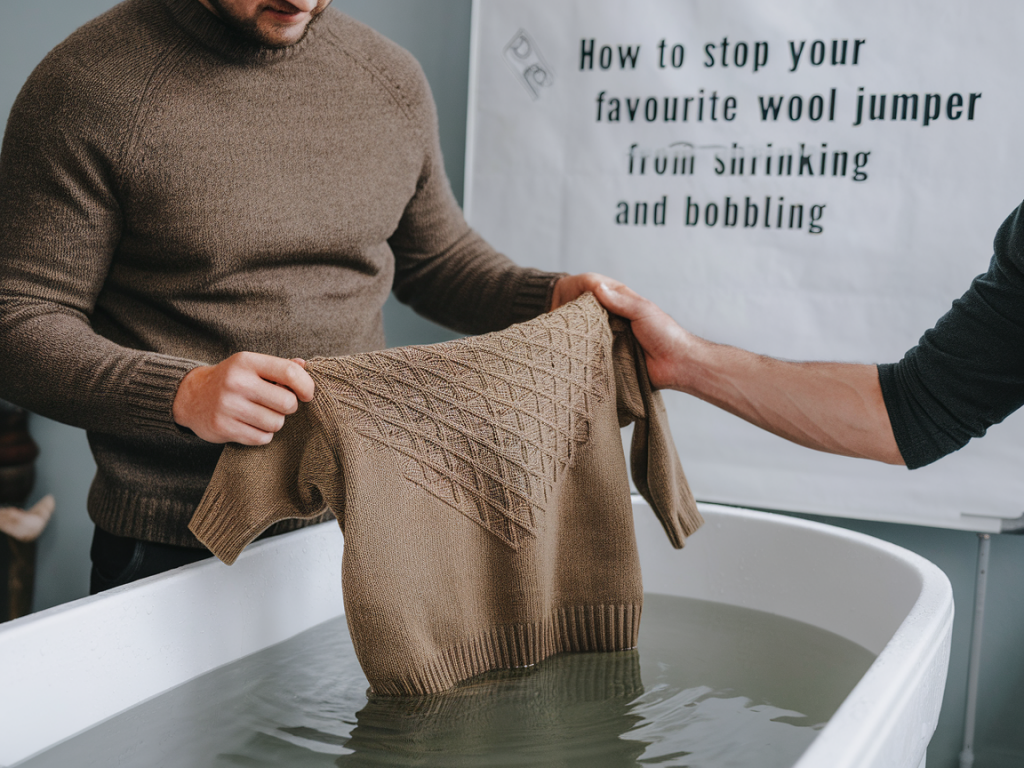
Fill a basin with cold water and add 1–2 tablespoons of gentle hair conditioner or baby shampoo. These products soften fibres and make them more pliable.Soak the jumper for 20–30 minutes so the conditioner can penetrate the fibres.Gently squeeze out excess water — do not wring. Roll the jumper in a towel to remove further moisture.Lay flat on another towel and gently stretch the jumper back to its original dimensions. Use pins on the towel to hold the edges if needed. Work slowly and evenly — don’t yank.Allow to dry flat. You may need to repeat the process once more, very gently, if it’s still tight.When a jumper is badly felted or heavily shrunk
If the fabric is densely felted (scrunchy, stiff and much smaller), the damage is usually irreversible — felting closes the scales on the fibres and they don’t reopen easily. However, all is not lost:
Repurpose: Turn the jumper into gloves, a hat, or even cushion covers. I once made a cosy cat bed from a felled jumper and it felt satisfying, not wasteful.Professional help: Some specialist cleaners can improve felting slightly, but results vary and costs may outweigh value.Small mends that make a big difference
Minor repairs keep a jumper wearable and extend its life. I keep a little sewing kit for these jobs.
Reinforce loose seams: Use matching thread and small backstitches to secure stretched seams.Repair tiny holes: For small holes, do a neat darning stitch using a needle and matching wool. A simple technique is to weave thread horizontally then vertically to recreate the fabric structure.Replace buttons and trims: A worn button or snapped toggle can make a favourite jumper feel neglected. Keep spares from garments or use pretty alternatives to update the look.Products and extras I recommend
Here are a few things I find genuinely helpful:
Eucalan wool wash (no‑rinse, conditions fibres)Philips Fabric Shaver (for bigger bobbles)Sweater comb or cashmere comb (for delicate surfaces)Mesh laundry bags (protects from agitation)Cedar storage blocks (moth deterrent and smell‑keeper)Simple routines to keep your knits looking new
Make these steps a habit and you’ll notice fewer surprises: wash only when necessary (airing often helps), treat pills at the first sign, store folded, and avoid heat. I aim to be realistic — some wear is inevitable, and that lived‑in feel can be part of a jumper’s charm. But with a little care, you can keep your favourite wool pieces soft, shapely and passable for years.